
Package wastewater plants are a fast, economical solution for communities that cannot connect to a sewer network. But a poorly chosen unit means years of odour, breakdowns and fines. Ask these questions:
1. What are the real population and flow?
Daily per-capita flow (usually 100–200 L/person·day) and peak hourly flow must be calculated correctly. Occupancy in hotels and camps changes greatly with the season; the plant must work at both low and high load.
2. Is the wastewater really domestic?
Kitchen grease, laundry detergents or workshop effluent call for pre-treatment (grease trap, neutralisation).
3. Where will it be discharged?
Stream, sea, soil or irrigation: the receiving body determines which limits and extra steps (filtration, UV) are needed.
4. Is the tank material right for the site?
Epoxy-coated carbon steel is economical; in aggressive environments, GRP coating or stainless steel lasts longer. For buried units, structural strength must also be checked.
5. What level of automation?
Fully automatic PLC control, alarms for blowers and pumps, and remote monitoring greatly reduce the need for operators and downtime.
6. How will sludge be managed?
The storage volume for excess sludge and the desludging interval should be planned from the start.
7. Is after-sales support available?
A supplier that does not offer commissioning, operator training, spare parts and maintenance contracts will leave you alone at the first breakdown.
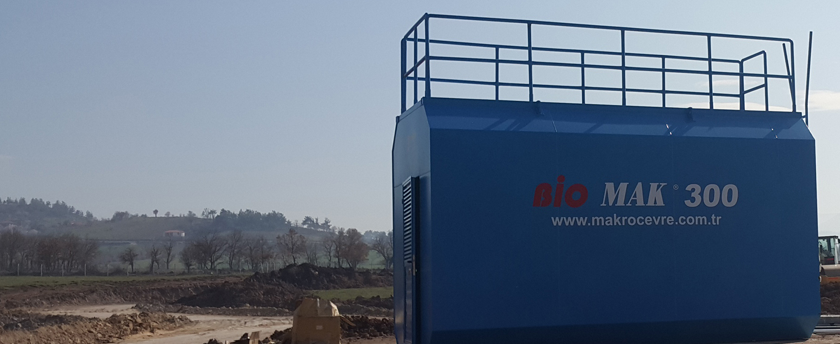
Our BİO-MAK® package plants come in standard models from 5 to 30,000 people. Use our capacity calculator for an instant preliminary sizing.